
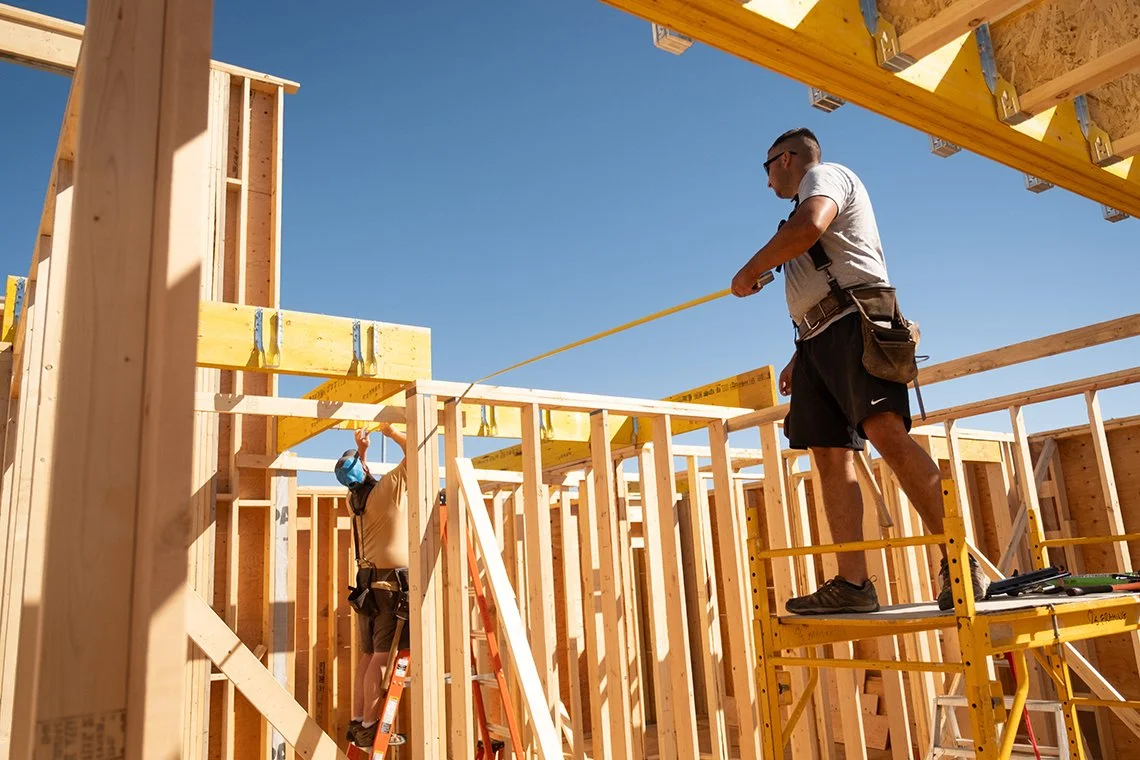
Most homeowners never see what’s behind the drywall.
And that’s understandable. When you walk into a finished home, your attention goes to the natural light, the layout, the kitchen, the flooring, and the details that make up the space of a home.
But the real story of a home often lives where you can’t see it.
Inside the walls.
One of our construction standards we follow is framing our walls 16 inches on-center, often written as 16” OC. It might seem like a small detail in the construction process, but it plays a meaningful role in the long-term strength, performance, and feel of a home.
Let’s talk about why it matters.
What Does 16” On-Center Mean?
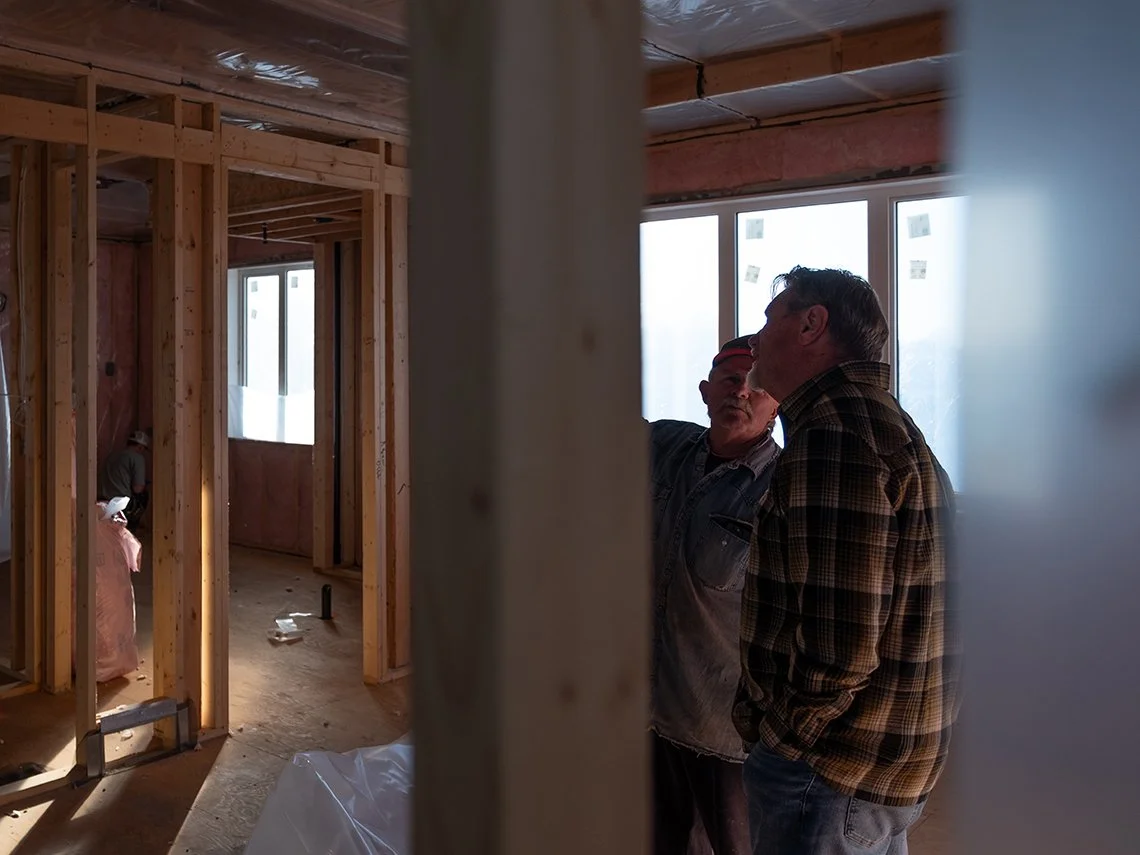
“On-center” refers to the distance between the center of each vertical framing stud in a wall.
When a wall is framed 16 inches on-center, it means each stud is spaced 16 inches apart from the next one.
While this may seem like just a technical detail, this spacing affects several important aspects of how your home performs.
Strength and Structural Integrity
Framing a wall at 16” OC creates a stronger structural system than wider stud spacing.
With more framing members supporting the walls, the structure becomes more rigid and stable. This helps the home better resist movement over time and creates a more solid feel when you live in it.
In simple terms, it builds a stronger skeleton for the home - and strength = longevity.
Better Support for Interior Finishes
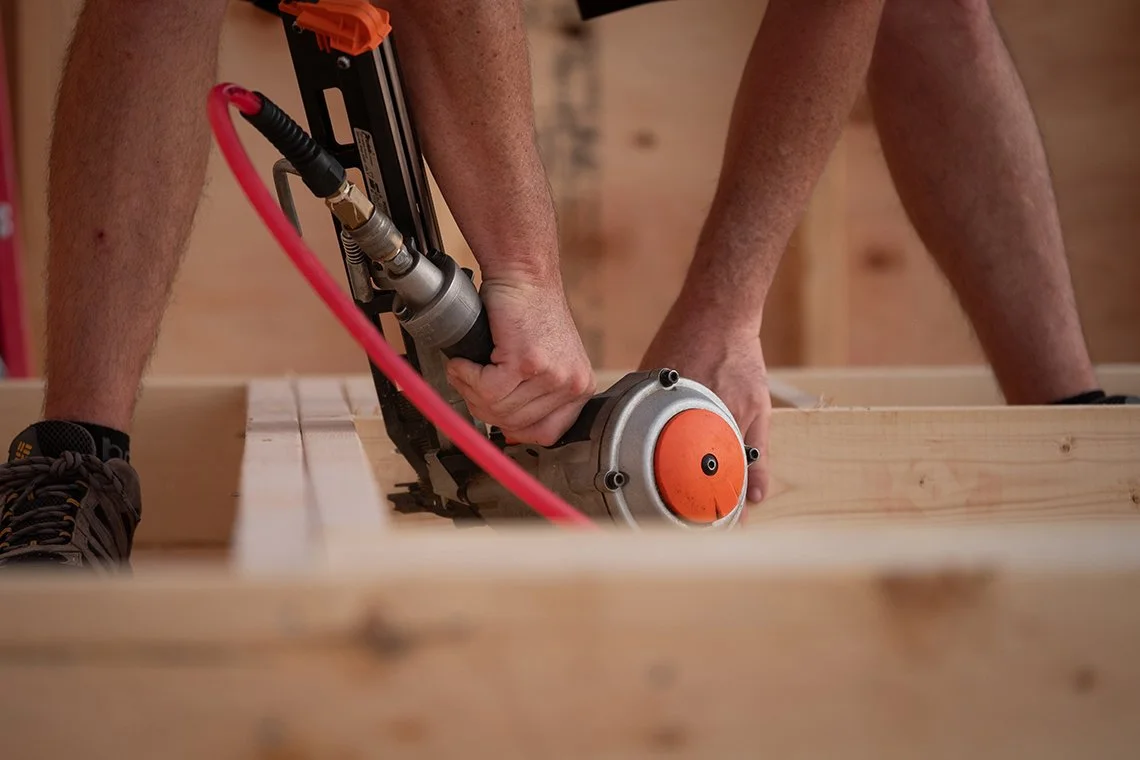
One of the most common causes of drywall cracking and nail pops is subtle movement in the framing.
With closer stud spacing, drywall panels have more support behind them. That extra support helps minimize flexing in the walls, which can reduce cosmetic issues over time.
It’s one of the details that helps a home age gracefully.
Improved Insulation Consistency
Framing at 16” OC also helps create more consistent insulation installation.
With tighter framing spacing, insulation batts fit more securely between studs. This can help reduce gaps or compression, which improves the overall thermal performance of the wall system.
The result is a home that stays more comfortable and energy efficient.
Better Support for Cabinets, Shelving, and Wall Features
Another practical advantage shows up years after construction.
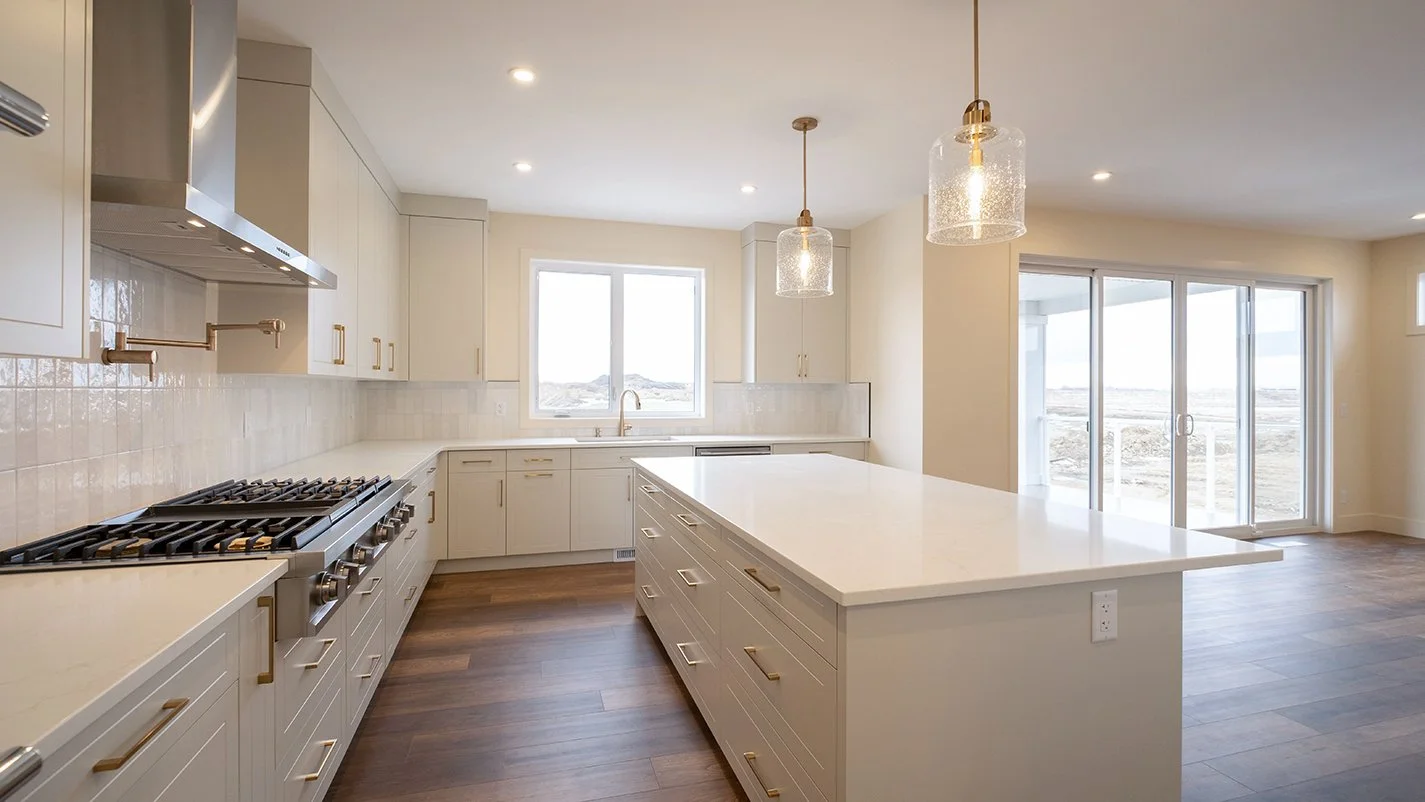
When studs are spaced 16 inches apart, homeowners and tradespeople have more frequent attachment points when installing (though we do also put blocking in with our wall studs so the cabinetry can be easily installed and there’s no need to search for a wall stud):
Cabinets
Floating shelves
Wall-mounted TVs
Handrails
Artwork and mirrors
It simply gives the walls more built-in support.
The Philosophy Behind the Detail
Building a home is a series of decisions.
Some are visible the moment you walk through the front door. Others disappear behind drywall and paint.
But those hidden decisions are often the ones that determine how a home performs 10, 20, or even 50 years from now.
Framing at 16” on-center is one of those choices we make because the longevity of our homes matters.
It’s not the flashiest part of construction.
But it reflects a simple philosophy:
Build the parts you can’t see with the same care as the parts you can.
Because in the end, quality reveals itself over time.