Why We Build With 16” On-Center Framing

Most homeowners never see what’s behind the drywall.

And that’s understandable. When you walk into a finished home, your attention goes to the natural light, the layout, the kitchen, the flooring, and the details that make up the space of a home.

But the real story of a home often lives where you can’t see it.

Inside the walls.

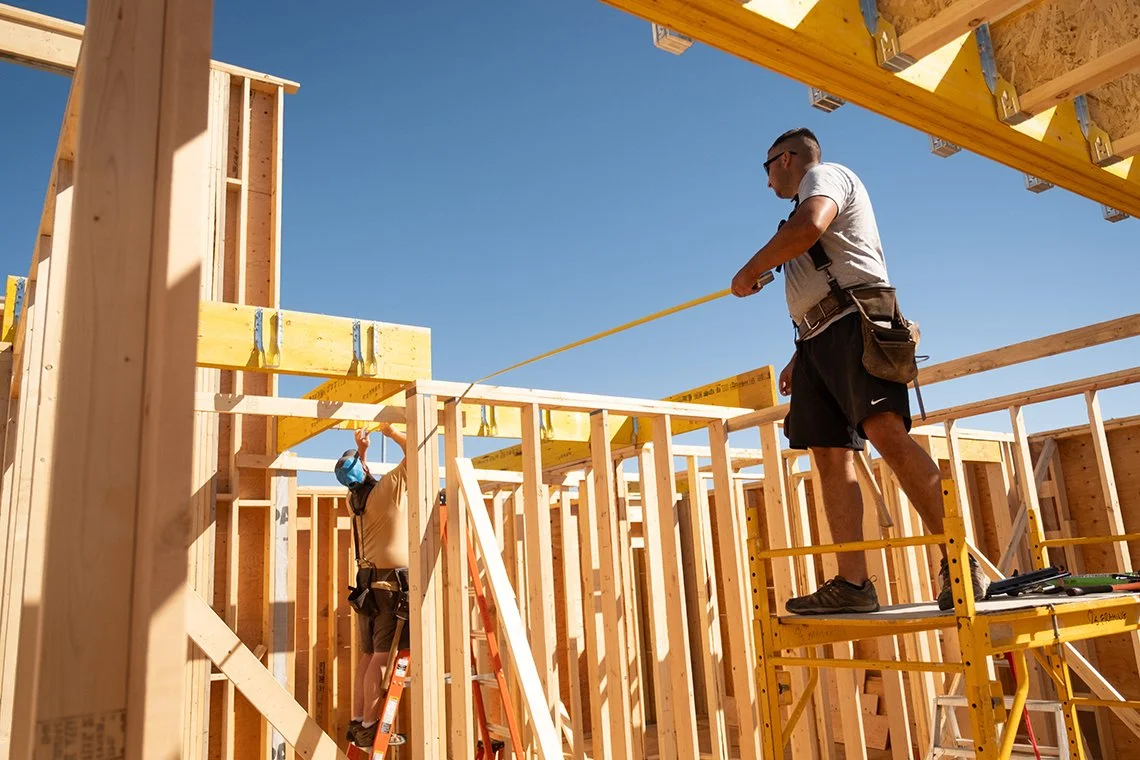
One of our construction standards we follow is framing our walls 16 inches on-center, often written as 16” OC. It might seem like a small detail in the construction process, but it plays a meaningful role in the long-term strength, performance, and feel of a home.

Let’s talk about why it matters.
What Does 16” On-Center Mean?

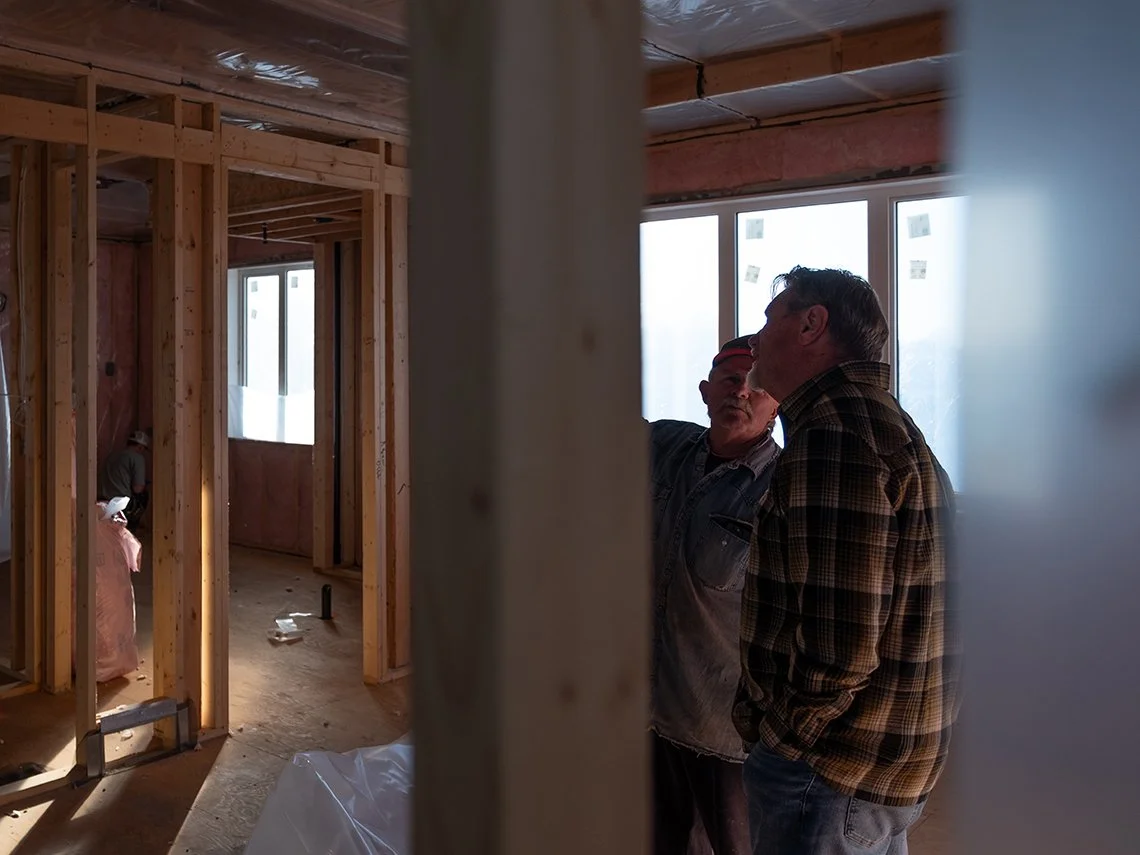
“On-center” refers to the distance between the center of each vertical framing stud in a wall.

When a wall is framed 16 inches on-center, it means each stud is spaced 16 inches apart from the next one.

While this may seem like just a technical detail, this spacing affects several important aspects of how your home performs.


Strength and Structural Integrity

Framing a wall at 16” OC creates a stronger structural system than wider stud spacing.

With more framing members supporting the walls, the structure becomes more rigid and stable. This helps the home better resist movement over time and creates a more solid feel when you live in it.

In simple terms, it builds a stronger skeleton for the home - and strength = longevity.
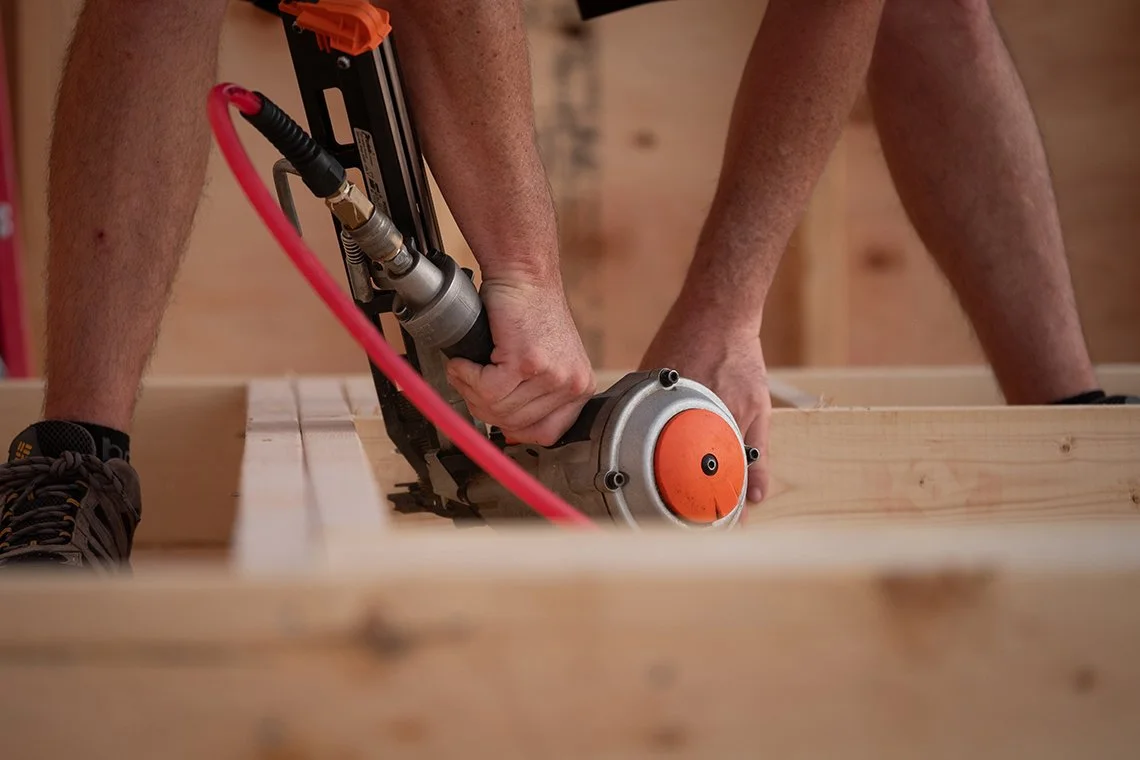
Better Support for Interior Finishes

One of the most common causes of drywall cracking and nail pops is subtle movement in the framing.

With closer stud spacing, drywall panels have more support behind them. That extra support helps minimize flexing in the walls, which can reduce cosmetic issues over time.

It’s one of the details that helps a home age gracefully.


Improved Insulation Consistency

Framing at 16” OC also helps create more consistent insulation installation.

With tighter framing spacing, insulation batts fit more securely between studs. This can help reduce gaps or compression, which improves the overall thermal performance of the wall system.

The result is a home that stays more comfortable and energy efficient.
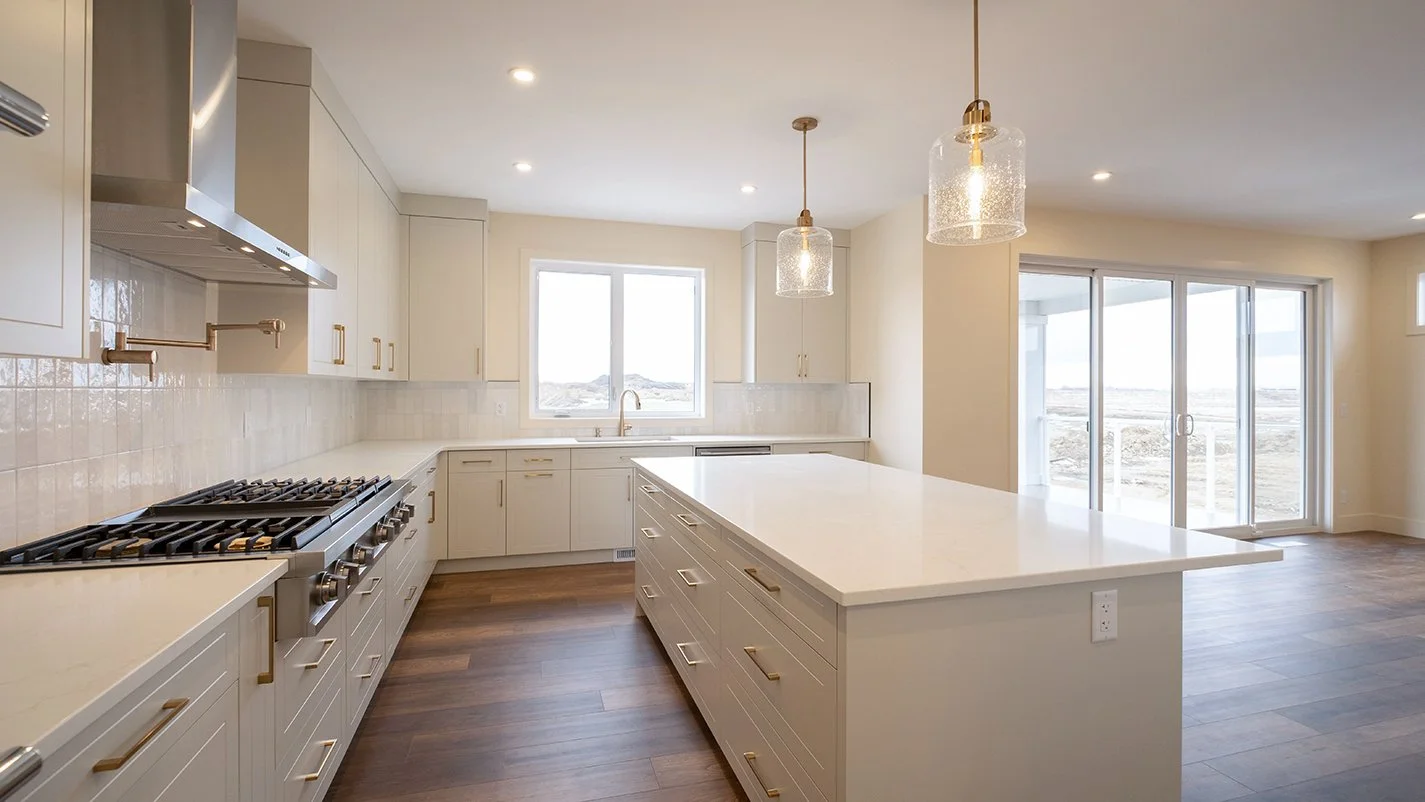
Better Support for Cabinets, Shelving, and Wall Features

Another practical advantage shows up years after construction.

When studs are spaced 16 inches apart, homeowners and tradespeople have more frequent attachment points when installing (though we do also put blocking in with our wall studs so the cabinetry can be easily installed and there’s no need to search for a wall stud):

  • Cabinets

  • Floating shelves

  • Wall-mounted TVs

  • Handrails

  • Artwork and mirrors

It simply gives the walls more built-in support.


The Philosophy Behind the Detail

Building a home is a series of decisions.

Some are visible the moment you walk through the front door. Others disappear behind drywall and paint.

But those hidden decisions are often the ones that determine how a home performs 10, 20, or even 50 years from now.

Framing at 16” on-center is one of those choices we make because the longevity of our homes matters.

It’s not the flashiest part of construction.
But it reflects a simple philosophy:

Build the parts you can’t see with the same care as the parts you can.

Because in the end, quality reveals itself over time.
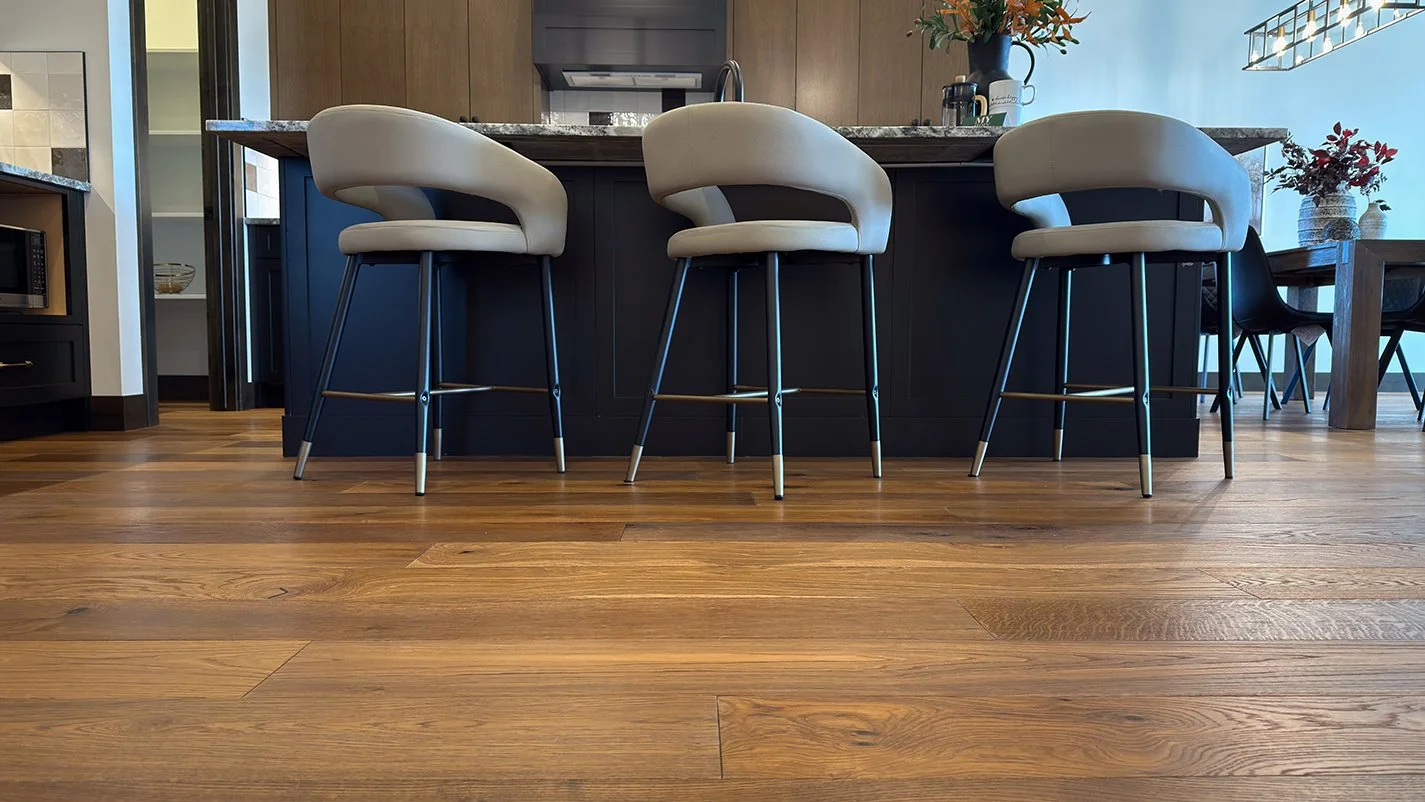
Floor Deflection...what is that?

We Build to L/480 When Most Don’t

When you walk through a home, you feel it — even if you can’t explain it.

Some floors feel solid and quiet. Others feel slightly bouncy. Flexible. Hollow.

That difference isn’t accidental - it’s structural. And it comes down to something most homeowners have never heard of: Floor deflection.

What Is Floor Deflection?

Deflection is the amount a floor system is allowed to bend under load.

It’s measured as a ratio — commonly written as L/240, L/360, L/480, etc.

  • “L” represents the span (the length between supports).

  • The number represents how much that span is allowed to deflect (bend).

For example:

  • L/360 means a floor can deflect 1 inch for every 360 inches of span.

  • L/480 means that same floor can only deflect 1 inch for every 480 inches of span.

The higher the second number, the stiffer the floor - this is a good thing.

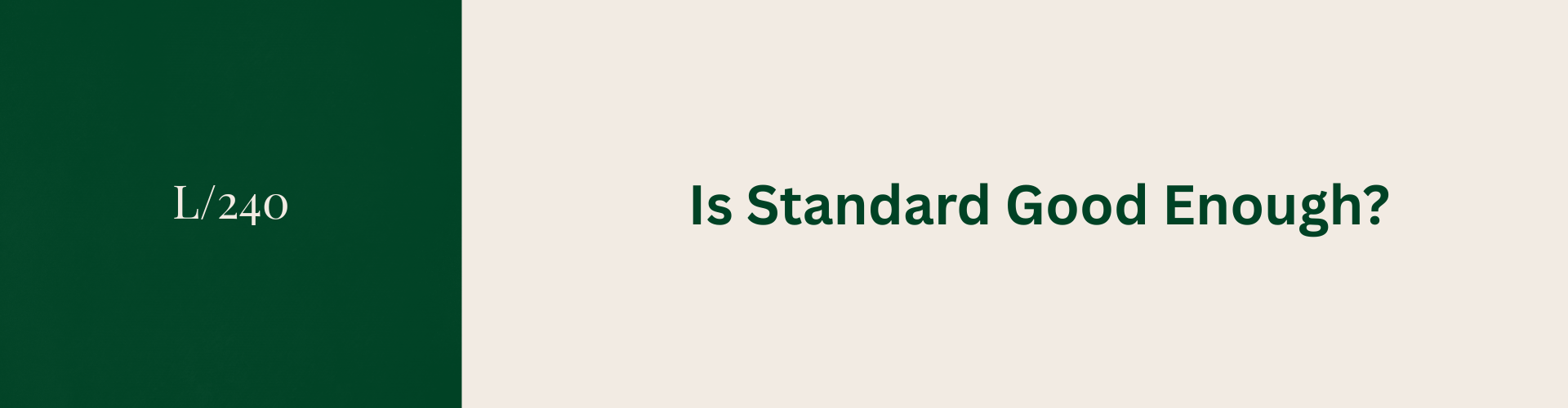
The Industry Standard: ?

L/240 is technically acceptable under some interpretations of the Alberta Building Code - and you still see this. Many builders have moved up to L/360 in most residential construction.

It meets code - it passes inspection - and is considered “acceptable.”

But acceptable and exceptional are not the same thing.

At L/360, floors may meet structural requirements — but they can still feel slightly springy underfoot, especially over longer spans or in open-concept homes.

Over time, that movement can also contribute to:

  • Squeaks developing

  • Drywall cracking

  • Tile grout fractures

  • Trim separation

  • Nail pops

None of this means failure - it simply means movement.

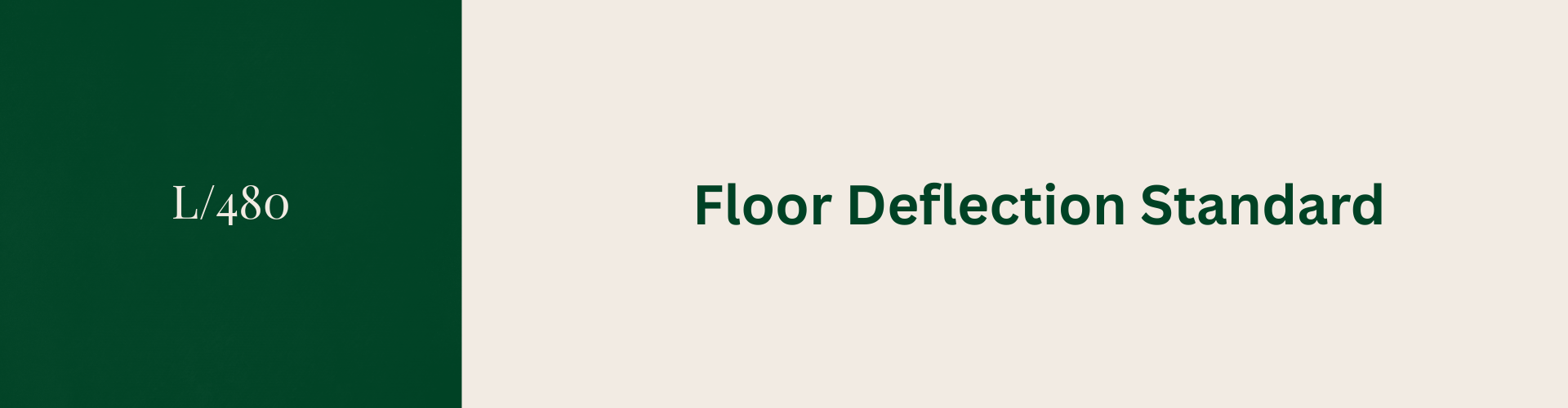
Our Standard: L/480

At RAVN Homes, we build our floor systems to L/480. That’s a 50% increase in stiffness over the standard minimum.

What does that mean in real life?

1. A Solid Feel Underfoot

When you walk across an L/480 floor, you don’t feel vibration or bounce.

It feels grounded. Stable. Quiet. That feeling is subtle — but powerful. It’s the difference between a house that feels light and one that feels anchored. And when you're building homes designed to last generations, that matters.

2. Better Performance for Hard Surfaces

Modern homes use more rigid finishes:

  • Engineered hardwood

  • Large format tile

  • Stone surfaces

  • Custom millwork

Rigid materials don’t like movement. By building to L/480, we reduce some of the potential issues mentioned above.

3. Longevity Built Into the Frame

Every time a floor flexes, materials experience stress. Tiny amounts over long periods add up.

By limiting deflection:

  • Fasteners stay tighter

  • Adhesives perform better

  • Joints remain stable

  • Noise is reduced long-term

It’s not just about today’s walk-through. It’s about how the home feels 10, 20, even 30 years from now.


Why Most Builders Don’t Do This

Building to L/480 requires:

  • Larger or engineered joists

  • Tighter span calculations

  • More thoughtful structural planning

  • Higher material costs

It’s not necessary to meet code. But we’re not building to the minimum standard. We’re building to a standard that aligns with how we believe homes should feel and perform.

The Difference You Can’t Always See — But Always Feel

Most people will never ask a builder about deflection ratings.

But they will notice:

  • How quiet a room feels.

  • How stable the floor feels beneath them.

  • How solid the home feels as a whole.

True quality is often hidden inside the structure.

You don’t see it in a showroom - you see and feel it over time.

And that’s why we build to L/480.

Because details matter — even the ones buried beneath your feet.

A Home Is Not a Product — It’s a Place Your Life Unfolds

For a long time, homes have been treated like products.

They’re marketed through numbers, features, and finish lists. Square footage becomes a headline. Upgrades become talking points. Value is reduced to what can be compared side by side.

That approach works — on paper.

But living doesn’t happen on paper.

Over time, we noticed something the industry rarely talks about:
Homes can check every box and still feel disconnected from the lives unfolding inside them.

They function. They impress. They sell.
And yet, something is missing.

It’s why RAVN Homes has always believed that homes should be built around people - not the other way around.

It’s an environment that quietly shapes how you move through your days.

Morning routines. Evenings that slow down. Conversations that happen without planning. Moments that don’t make it into photos but define the experience of living there.

When a home is designed as a product, those moments are left to chance.
When it’s designed as a place for life, they’re considered from the beginning.

We don’t start with features.
We start with how life is meant to unfold inside the space.

Because the most meaningful homes aren’t the ones that perform best in a comparison.
They’re the ones that support real life — day after day, year after year.

That shift in thinking changes everything.

The Future of Home Building is Human

The Future of Home Building is Human

The future of home building isn’t about faster systems or smarter tools. It’s about people. Homes aren’t built for algorithms — they’re built for the way you live, the moments you share, and the life you want to create. Technology can support the process, but it can’t replace care, craft, and human connection. The homes that truly last are built by hands that care, guided by experience, and shaped with intention.

Where Legacy Meets Vision: Welcome to RAVN Homes

Where Legacy Meets Vision: Welcome to RAVN Homes

After 35 years of building homes, one truth has become clear: we were never like most builders — and neither were the people who trusted us with their homes.

Today, we step into the next chapter of our story: RAVN Homes. A name inspired by the raven, a symbol of transformation, wisdom, and vision. We carry forward everything that built our legacy — craft, care, and connection — and expand into a new era of design, innovation, and homes built for the next chapter of your life.

Where legacy meets vision. That is RAVN Homes.

The 2026 Home Builder & Design Trends That Will Define Living Spaces

The 2026 Home Builder & Design Trends That Will Define Living Spaces

As we move into 2026, home design is no longer about chasing trends—it’s about creating spaces that support how we truly live. Today’s homes are being shaped by a desire for sustainability, wellness, flexibility, and connection to nature. From warmer, more grounded materials to adaptable floor plans and wellness-focused spaces, the future of home building is intentional, personal, and deeply human.

Why We Choose Wood Over MDF for Your Home’s Baseboards and Window Casings

Why We Choose Wood Over MDF for Your Home’s Baseboards and Window Casings

Why We Choose Wood Over MDF for Your Home’s Trim
At Scott Alan Custom Projects, every detail in your home matters—even the baseboards and window casings. We use real wood instead of MDF because it’s stronger, more durable, and adapts naturally to temperature changes. In winter, wood handles dry air and fluctuating heat without cracking or warping, keeping your home beautiful and comfortable year-round.

Your Story Shapes Your Home

Your Story Shapes Your Home

At Scott Alan Custom Projects, we’ve learned that the most meaningful homes begin long before the foundation is poured. They start with your story—your daily rhythms, your family traditions, and the future you’re building toward. When homeowners share how their mornings unfold, where they gather, and what they dream about, it gives us the insight to design a home that truly works for them. Because a home shouldn’t just look beautiful—it should support who you are and who you’re becoming.