
At RAVN Homes, we believe you should understand exactly what goes into building your home — not just the finishes you can see, but the structural materials working quietly behind the scenes every single day. One of the choices we're most deliberate about is using fir plywood for our sub-floors and spruce plywood for our wall sheathing and roof decking, instead of oriented strand board (OSB). Here's the full picture on why.
Understanding the Materials
Plywood is manufactured by bonding thin sheets of wood veneer together in alternating grain directions — typically in odd numbers of layers (3, 5, 7-ply, etc.). This cross-lamination is what gives plywood its characteristic strength and dimensional stability.
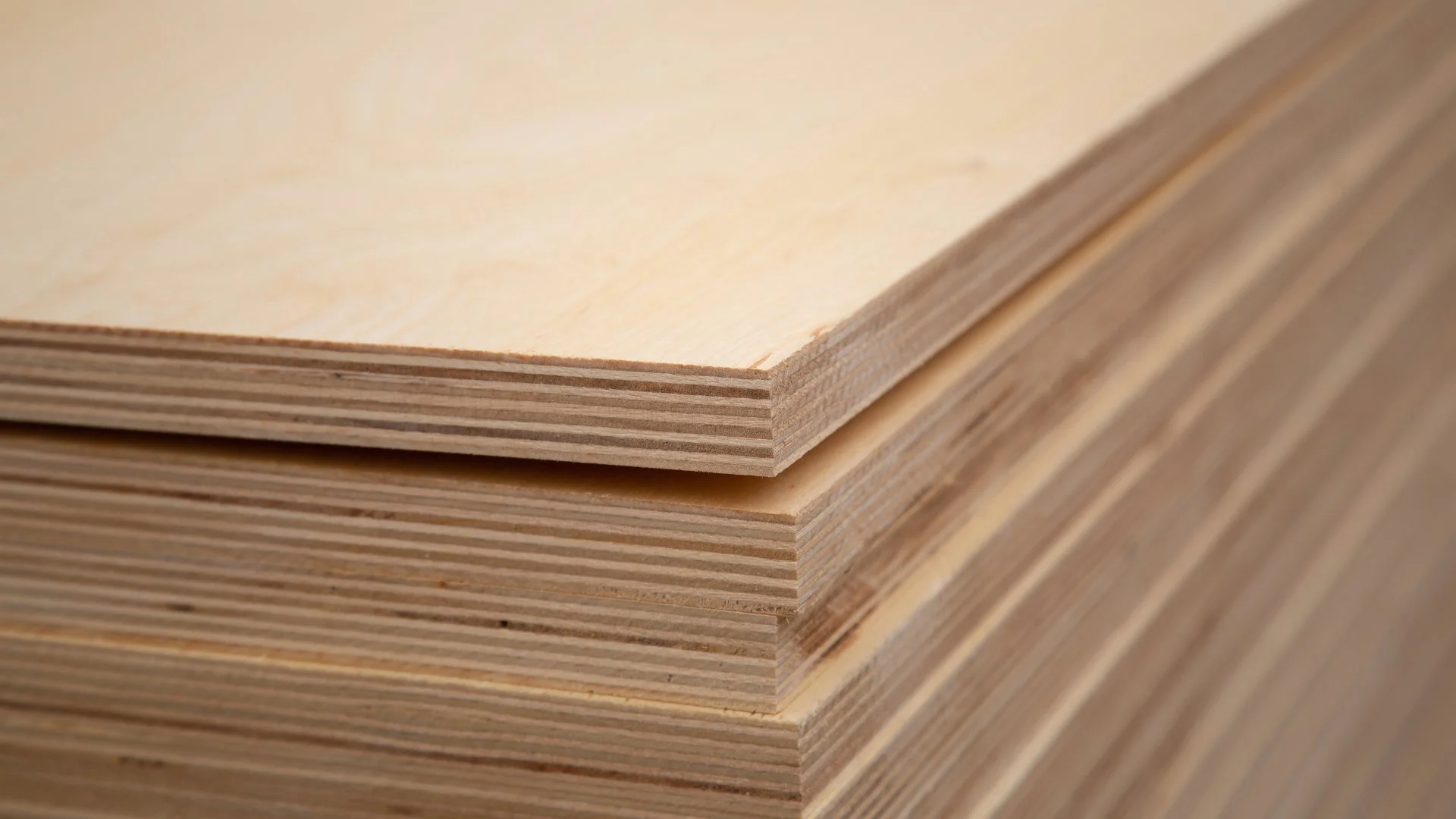
Douglas fir is one of the most respected structural wood species in North American construction. It's exceptionally dense and stiff, with outstanding nail and screw holding strength — qualities that make it the gold standard for sub-floor applications where rigidity and fastener retention are paramount. Spruce, used for our wall and roof sheathing, offers a high strength-to-weight ratio, straight grain, and consistent fiber structure, making it ideal for panels that need to be both strong and lightweight across large surface areas.
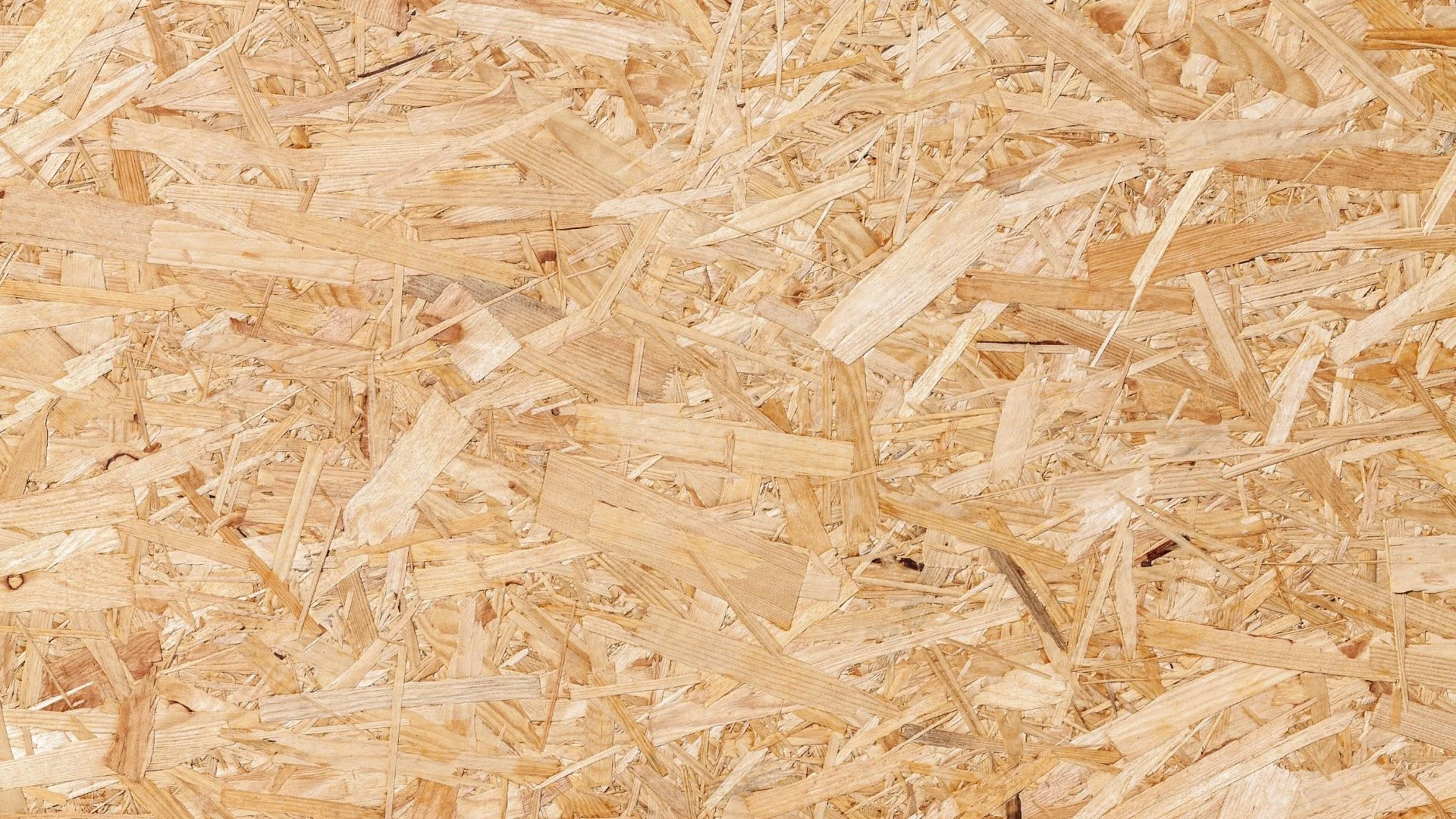
OSB is engineered differently. It's produced by compressing and bonding small wood strands or chips — often from fast-growing, lower-density species — with wax and resin binders under high heat and pressure. While OSB has become the industry default largely due to its lower cost and efficient use of raw material, those manufacturing differences have real downstream consequences for performance.
Structural Performance: It's About More Than Just Strength
Both plywood and OSB carry similar span ratings and are approved for the same structural applications under Canadian building codes — so on paper, they look equivalent. But structural performance in the real world is about more than load ratings.
Plywood's cross-laminated construction distributes stress across multiple grain directions simultaneously. This means it resists not just vertical loads, but lateral racking forces as well — the kind your walls experience during high winds or seismic movement. It also has superior nail and screw withdrawal resistance compared to OSB, which matters enormously across all three applications.
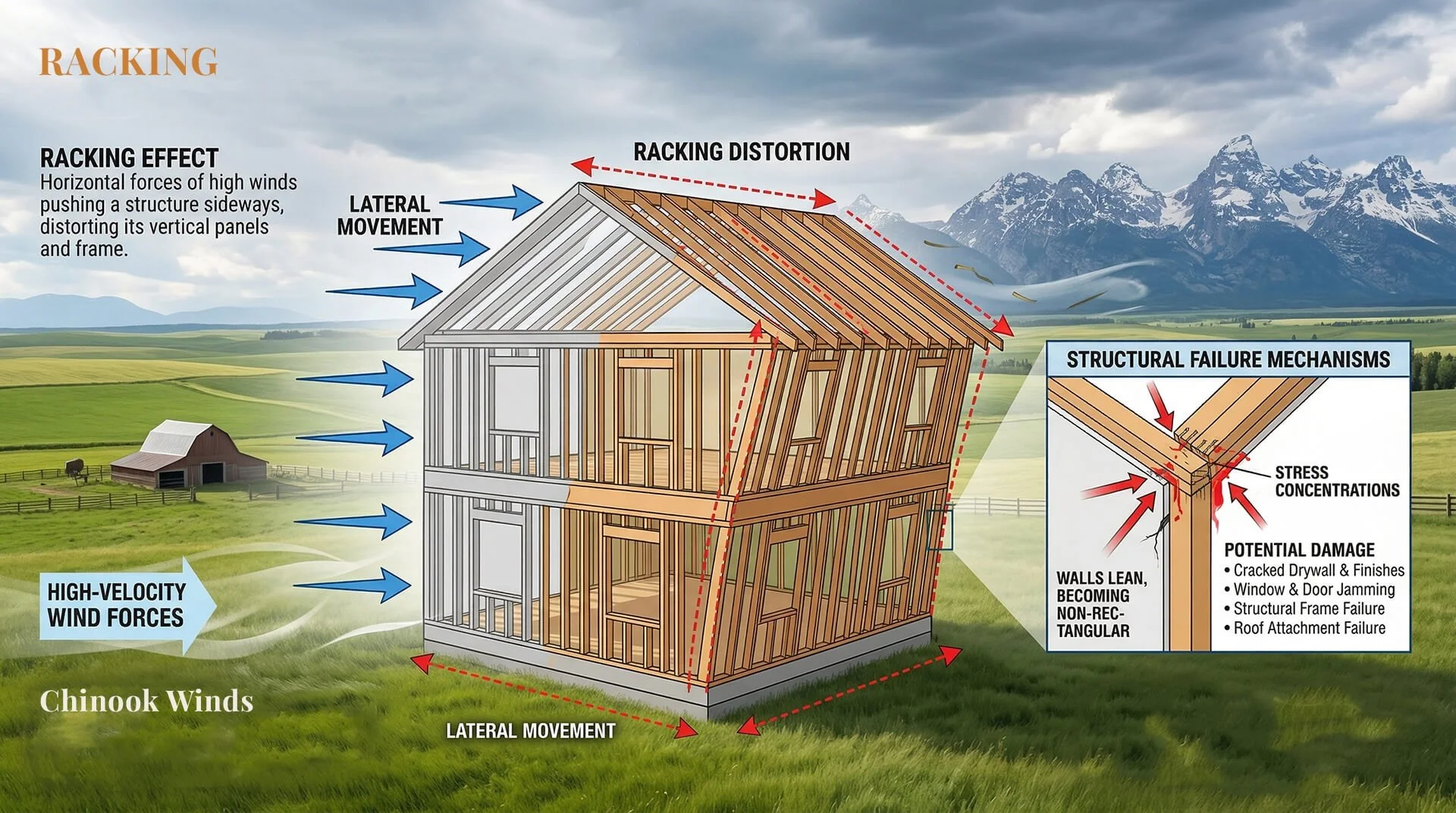
OSB, by comparison, has more directionality to its strength — it performs well along its primary axis but is more vulnerable to edge damage and splitting, particularly during installation or when fasteners are placed near panel edges.
Moisture Behaviour: Where the Real Difference Shows Up
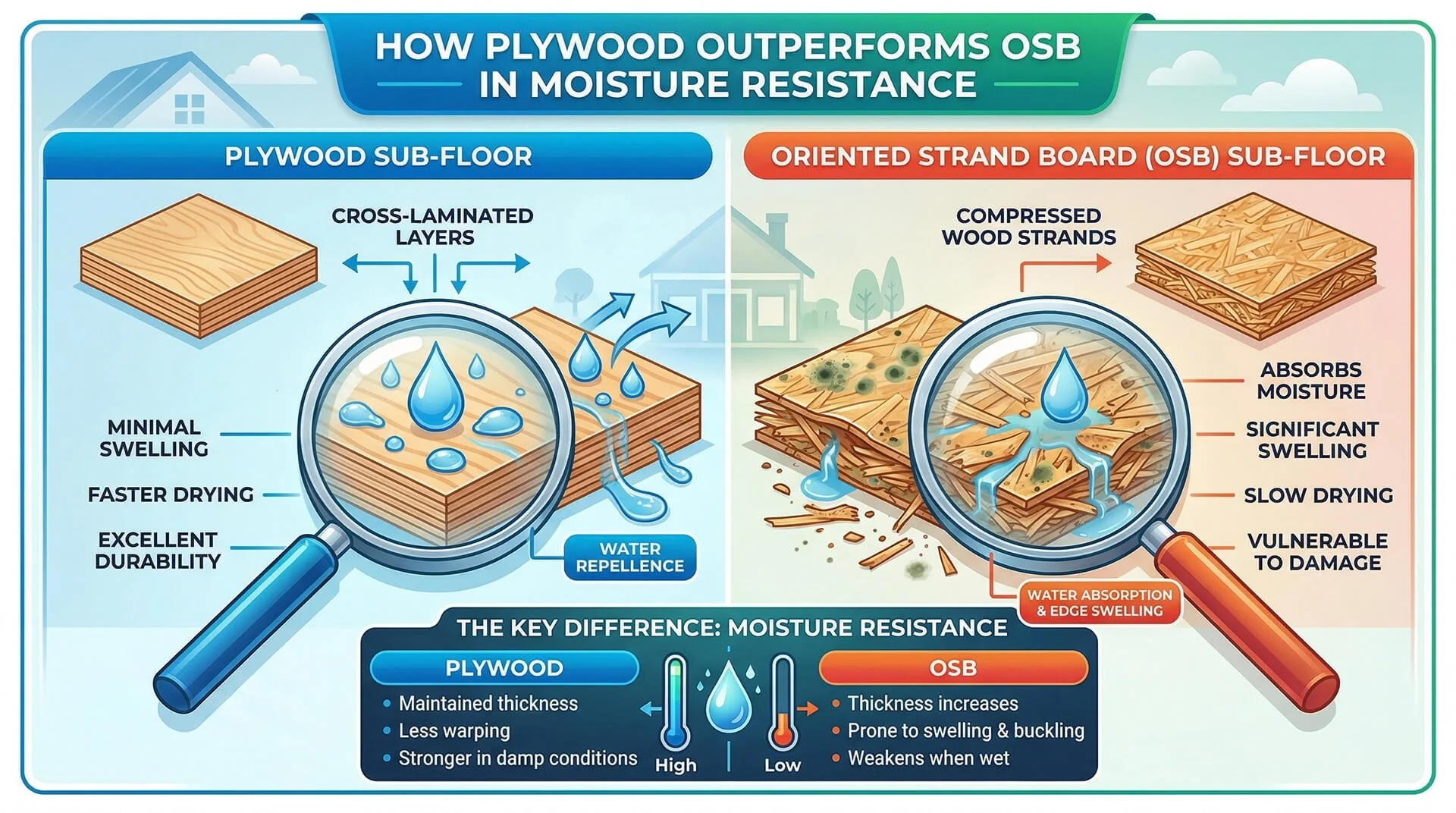
This is where plywood earns its place most convincingly, especially for Alberta builds. The key metric here is dimensional stability under moisture exposure.
When OSB absorbs moisture — whether from rain during the construction phase, seasonal humidity, or a minor leak — the compressed strands at the panel edges tend to swell significantly and irreversibly. This edge swelling can telegraph through finished flooring as ridges, compromise the integrity of roofing underlayment by creating an uneven surface, and cause exterior wall finishes to look uneven over time. OSB also has a much slower drying rate than plywood because its resin binders restrict moisture movement through the panel.
Both fir and spruce plywood respond to moisture more uniformly across the panel face and dry more quickly, because moisture can travel along the wood grain in each veneer layer. While no wood panel is immune to moisture damage, plywood is far more forgiving of the wet weather exposure that's simply unavoidable on an active construction site in our climate.
Fir Plywood Sub-Floors: The Foundation of Every Finished Surface
Your sub-floor is the critical interface between your structural framing and every finished floor covering in your home — hardwood, tile, vinyl plank, carpet. For that assembly to perform well long-term, the sub-floor needs to be flat, stable, and capable of maintaining a firm bond with adhesives and fasteners.
Douglas fir plywood is particularly well-suited here because of its exceptional density and stiffness. It resists deflection under point loads — the kind that occur under furniture legs or high-traffic areas — better than virtually any other panel product. Its smooth, consistent face veneer gives us a reliable substrate for direct-glue flooring installations, and its uniform thickness tolerances mean fewer high spots or low spots to address before laying finished floors.
Because fir plywood holds fasteners so exceptionally well, our glue-and-screw sub-floor installations stay tight and squeak-free in a way that OSB assemblies can struggle to match over time as the compressed strands compress further under load.
Spruce Plywood Wall Sheathing: Rigidity, Racking Resistance, and a Clean Nailing Surface

Structural wall sheathing does two jobs: it braces your wall frames against lateral racking forces, and it provides the substrate for your weather-resistive barrier and exterior cladding. Spruce plywood handles both exceptionally well.
Its high strength-to-weight ratio means we get excellent racking resistance without adding unnecessary mass to the wall assembly — an important consideration for overall structural efficiency. The consistent panel thickness and clean veneer face make it easier to achieve a flat, planar wall surface, which is the foundation of a well-performing building envelope. It also gives house wrap installers and siding crews a reliable nailing surface without the edge-swelling risk that can cause OSB panels to telegraph unevenness through your exterior finishes after the fact.
Spruce Plywood Roof Decking: Stability Under Demanding Conditions
Roof assemblies in Alberta face a demanding annual cycle — heavy snow loads in winter, significant UV and heat exposure in summer, and repeated freeze-thaw events in between. Your roof deck needs to hold its shape through all of it.
Spruce plywood's light weight is a genuine advantage here, reducing the dead load on your roof framing while still delivering the structural performance required. Its dimensional stability under thermal and moisture cycling means your roof deck stays flat, which directly supports the performance of your roofing system. Shingles installed over a flat, stable deck lie more uniformly, seal more effectively at their edges, and are less prone to wind uplift.
OSB roof decking, particularly in areas with prolonged snow coverage or ice dam conditions — both common in Alberta winters — is more susceptible to edge swelling and surface irregularities that can shorten the effective life of your roofing system.
A Considered Choice, Not Just a Premium Upgrade

We won't pretend fir and spruce plywood are inexpensive — they carry a meaningful cost premium over OSB, and that cost is real. But at RAVN Homes, we think about building materials the way a good engineer does: not just in terms of upfront cost, but total lifecycle performance. Structural panels are largely inaccessible once your home is built. Choosing the right ones the first time is the only opportunity you get.
That's the thinking behind every home we build. And it's a conversation we're always happy to have in more detail — because the more you understand about how your home is put together, the more confident you can feel about the investment you're making.
Curious about our full build specifications? Reach out — we'd love to walk you through it.